
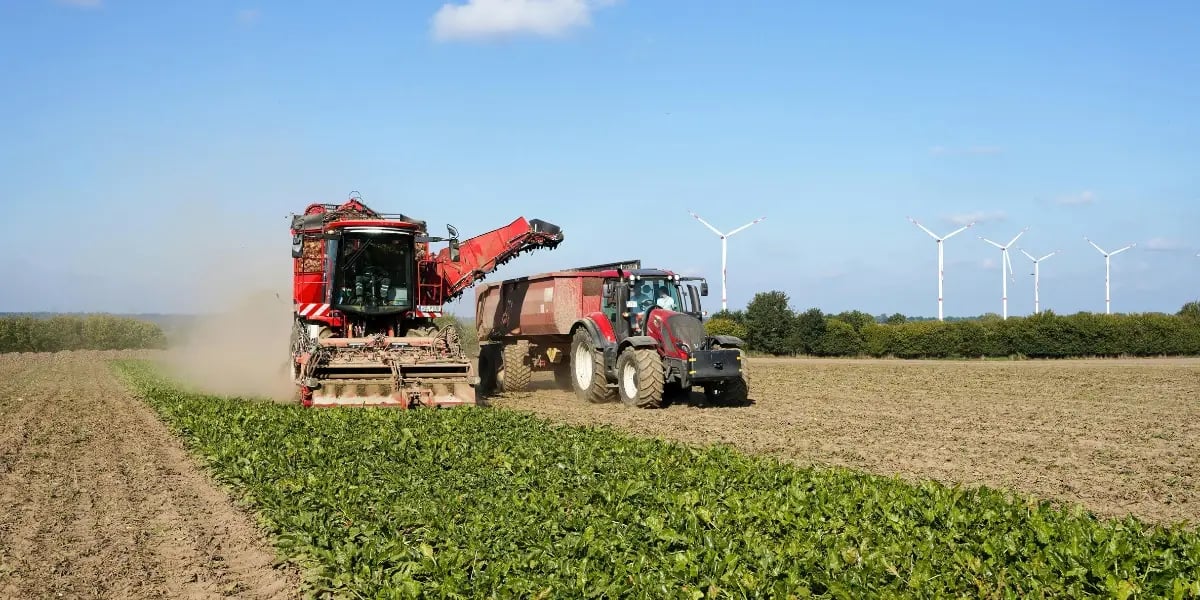
Data has become as essential as water and sunlight in driving innovation and sustainability. And certainly not something to turn your back on. In this blog, the BusinessHub team explores how harnessing data can help agricultural businesses like yours, stay ahead of challenges, boost productivity, and thrive. Agriculture was once an industry dominated by hard yakka, sweat and soil. Now it’s driven by bytes, satellites, and sensors. The classic image of a farmer may still hold some truth, but the modern farmer is just as likely to carry a tablet as a pitchfork. Today, agriculture isn’t just about growing crops; it’s about generating data. And as the global demand for food intensifies, agricultural businesses are finding that data may be their most valuable crop yet. Let's delve into this.
Data-Driven Farming: Revolutionising Agriculture with Technology

BusinessHub is an Australian ERP consulting and implementation partner specialising in MYOB Acumatica, Wiise and Microsoft Dynamics 365 Business Central. We help manufacturers, distributors, construction, food and beverage, not-for profits and project-based businesses select, implement and optimise cloud ERP systems.
An Industry Moving From Crops to Data
The Role of Technology in Modern Farming
With the current climate uncertainty, farmers are learning to do more with less. But being resourceful in agriculture now means something different than it did decades ago.
Where farmers once relied on generations of wisdom and painstaking trial and error, today they’re turning to something far more efficient: data. And it’s transforming agriculture from a slow grind into a cutting-edge, technology-driven industry.
The Importance of Innovation in Agriculture
Picture this: you’re in the middle of a drought, the weather unpredictable, and the soil you once trusted is no longer yielding the same results. Aussie farmers face this reality constantly, caught between the demands of our growing population and the tightening grip of climate change.
The solution? Innovation. Technology and data are helping farmers grow smarter, not just harder, enabling them to extract the maximum from their resources while minimising waste.
From Trial and Error to Data-Driven Decisions
For centuries, farming knowledge was passed down from generation to generation, often through stories around the kitchen table or hands-on lessons in the field. But the future of agriculture doesn’t leave much room for guesswork.
Traditional methods, while tried and true, are increasingly falling short in an industry now driven by precision and efficiency.
Data, unlike human intuition, doesn’t tire. It doesn’t second-guess. It gives answers based on hard facts, providing farmers with a roadmap to greater yields, healthier crops, and more sustainable practices.
The Rise of Precision Agriculture
Enter precision agriculture. Powered by technology and data, precision farming allows growers to micromanage their fields down to the last blade of grass. It’s farming, yes, but with a technological twist – and it’s ushering in a new era of agricultural productivity.
With satellites mapping fields and sensors tracking every variable from soil moisture to plant health, farmers are equipped to make decisions with laser precision, saving money and improving efficiency.
Data is Agriculture’s Most Valuable Crop
Agriculture, once bound by the constraints of soil and climate, is now flourishing in a new medium: data.
Planting begins not with a seed but with a string of numbers.
With every satellite pass, every sensor reading, farmers collect data on every inch of their land.
This data is analysed, refined, and transformed into insights that help optimise everything from watering schedules to planting cycles.
In this brave new world, data is more than just useful—it’s indispensable.
The Technologies Behind Data-Driven Agriculture
So, what exactly are the technologies propelling this data-driven transformation? At the heart of it all are satellites, GPS systems, and smart sensors.
These tools enable farmers to view their fields from an entirely new vantage point, one that offers more detail than the human eye could ever capture.
From soil health to machinery performance, everything is tracked, recorded, and analysed.
The result?
Data that can be used to enhance productivity and efficiency.
What is AgTech?
This is not some fancy term the BusinessHub team made up. AgTech is the marriage of agriculture and technology—a union that’s rapidly changing the face of farming. What started as a niche industry has exploded into a multi-billion-dollar global opportunity.
It’s not just about smarter farms; it’s about a revolution that touches every aspect of the supply chain, from the soil to the supermarket shelf. In fact, Australia is emerging as a global leader in the AgTech revolution. According to the Australian Farm Institute, the adoption of big data in agriculture represents the third major revolution in farming - with early adopters seeing productivity gains of up to 15%, thanks to data-driven farming techniques.
The Power of Big Data
The term “big data” might sound like something reserved for Silicon Valley, but it’s becoming the lifeblood of modern agriculture. In the context of farming, big data refers to the massive amounts of information generated by everything from weather stations to tractors.
This flood of information can be overwhelming, but when harnessed correctly, it holds the potential to revolutionise the way we grow food. From predicting weather patterns to optimising irrigation, big data is turning agriculture into a science of precision
The Impact of AgTech on Crop Management
In the past, farmers would treat entire fields uniformly, applying water, fertiliser, and pesticides in the same quantities across the board. But with precision agriculture, they can now target specific areas of their fields that need more attention while leaving healthier areas alone.
The result? Less waste, lower costs, and healthier crops.
Managing Agricultural Businesses with Data
Data doesn’t just help farmers manage their crops; it’s also transforming the way they run their businesses. When you think about the complexities of modern farming—finances, logistics, labour management—it’s clear that data can help streamline operations.
Farmers can use financial data to make more informed decisions, like which investments will yield the greatest return or which operations are eating into profits.
The Role of Online Accounting Software
One tool that’s making life easier for farmers is ERP software. With solutions like MYOB Acumatica, the BusinessHub team has helped farmers manage their operations from anywhere, tracking profitability and monitoring expenses in real-time. It’s a far cry from the days of handwritten ledgers and endless spreadsheets.
In an industry where margins can be razor-thin, having the ability to track every dollar counts. And with cloud-based software, farmers don’t need to be tied to their desks – they can access their data from anywhere, whether they’re in the office or out in the field.
Turning Data into Insights
Raw data is little more than numbers on a screen. Its true value lies in how it’s interpreted. With the right tools and expertise, data can be transformed into insights that drive better decision-making.be it adjusting planting schedules to optimise yields or analysing financial performance to find opportunities, data offers insight into the future of a business.
The Future of Data in Agriculture
The AgTech revolution is only just beginning, and the future promises even more innovation. With advancements in AI, robotics, and climate modelling, the next few years will see data play an even more critical role in agriculture. Farmers may soon have access to tools that allow them to predict climate shifts, optimise harvests, and automate labour-intensive tasks. The possibilities are endless—and they all hinge on one thing: data.
In today’s agricultural landscape, data is king. The farmers who embrace this new reality will be the ones who not only survive but thrive in the coming years.
By turning data into insights, they can grow more efficiently, make smarter decisions, and ultimately, revolutionise the way they farm.
As the world’s population continues to climb and natural resources become scarcer, the future of farming will depend on those who are willing to let data lead the way.
Want to know more? Contact the BusinessHub team today.
What is precision agriculture?
Precision agriculture uses technology like GPS and smart sensors to optimise crop management, helping farmers reduce waste and increase yields.
How can big data improve farming practices?
Big data helps farmers analyse patterns, predict weather, and optimise resources, leading to better decision-making and improved productivity.
What is AgTech?
AgTech refers to the integration of technology in agriculture to solve challenges and enhance farming operations through innovation.
How does can MYOB Acumatica benefit farmers?
Online ERP software like MYOB Acumatica allows farmers to manage their finances from anywhere, helping them track profitability and make informed business decisions.
What is the future of data in agriculture?
The future of agriculture will see increased reliance on data, with AI, robotics, and climate modelling tools revolutionising farming practices further.